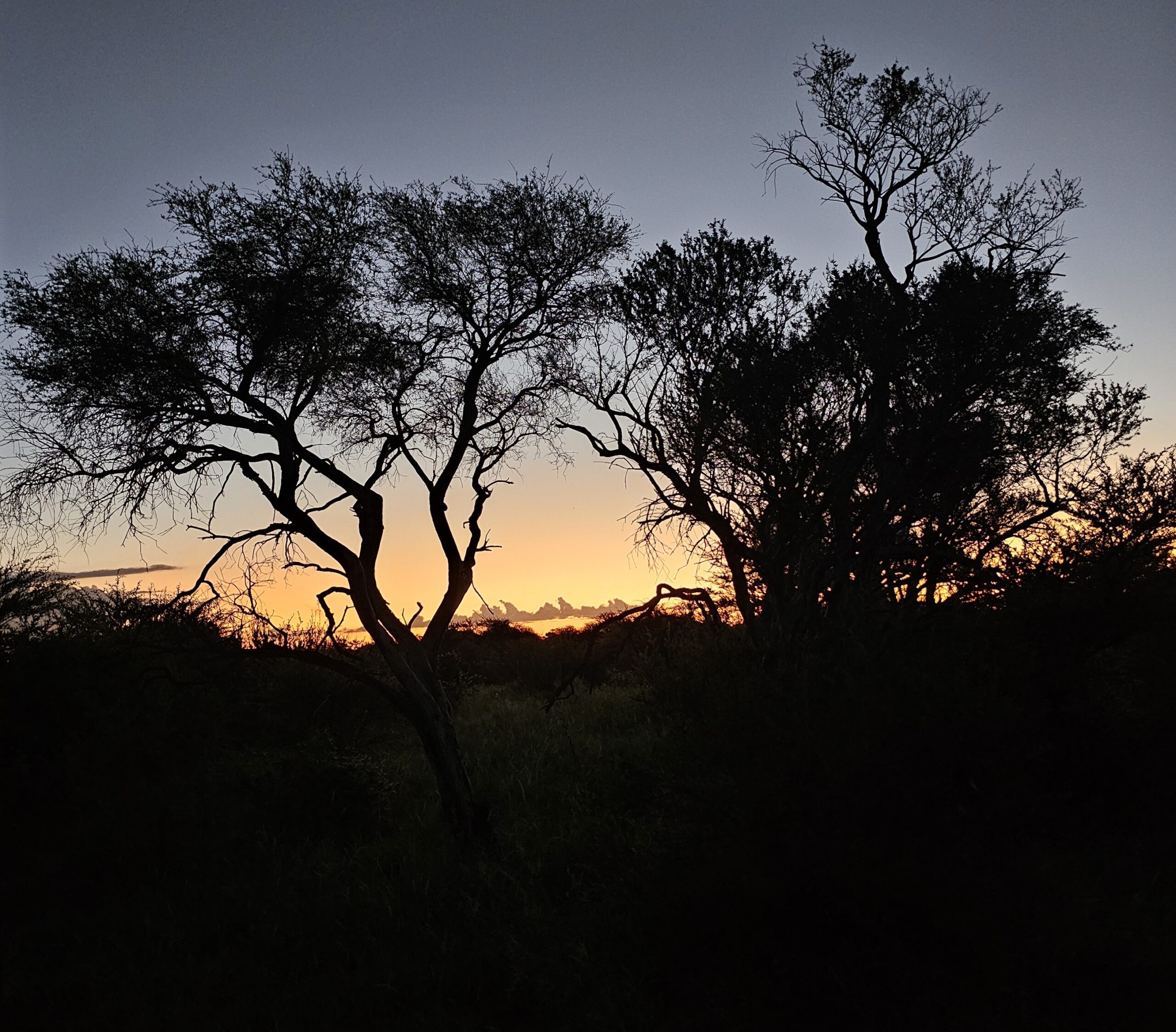
Naturally, on a safari the goal is seeing wildlife; as many as possible. I mentioned my worry that I would come on safari and not see any animals. I mean ANY animals. That wasn’t even including my desire to see a pangolin, which is rare enough that I didn’t count it as a milestone. Just the chance to see one may have to be enough. Within hours, I not only saw animals, my experience was more than I dared hope for.
An unbelievable start: the first day
We wasted no time. After going through the waivers and paperwork, we set out in late afternoon to check on the wild dogs. Wild dog monitoring is an ongoing research project for Working with Wildlife. The focus is to gauge predator to prey balance and how much territory the dogs cover so habitat needs can be established. Since they stay in packs, one dog is collared to enable tracking.
Heading out
As we went to their last known location, it felt surreal. I was here. On safari in South Africa. Looking for African wild dogs. Seeing wildlife in their native home. A dream becoming real. It was indescribable. I was transported into a place completely unlike anything I have known. I breathed in each moment, soaking everything into my senses.
Seeing African wild dogs
It turns out euphoria can expand! I didn’t know that was possible. But as we pulled the vehicle over to settle in their midst, I could hardly breathe. I certainly couldn’t speak. My brain was exploding. They watched us curiously but were unfazed. I could not say the same.
And pangolins
When we got back to camp for dinner, my host Gary casually(!) mentioned we would be heading out at dusk to replace a battery on a pangolin collar.
Wait. He said pangolin. I tried to stay calm and appear cool about it. None of this seemed possible. I was the luckiest person in the world. The collar needed a new battery and so we were to find the pangolin. What extraordinary fortune. And on the day of my arrival. The bucket list filled within 24 hours.
We set out before dusk as we didn’t want the motor sound to keep her (we actually don’t know the gender, but called her that) from coming out of the burrow.
When she came out, we followed her through the bush, tracking her signal. She froze and stayed still as Gary changed the battery and I held the flashlight. Her head was in a termite mound and she flinched often but would not move. That instinct is why they are in such danger from poaching. You can literally pick it up and carry it off.
The day’s coda
Nights were as magical as the days on safari. I was there in summer but Kalahari nights were cool comfort. My first night, I got a bit lost and as I wandered to my tent owls sprang to the sky, huge and beautiful. They were Western barn owls with a similar sound to our American ones, but a different vocal patten, like a dialect. But the day was not quite over.
I woke in the middle of the night to the sound of so many birds it seemed a symphony. I was siffused with gratitude and wonder that I was really here. That I made this dream happen.
Seeing wildlife throughout the week
An incredible start was not the end; the highlights continued. During my stay I saw elephants, white rhino, black rhino (from afar; he is a dangerous and ill-tempered soul), water buffalo, wildebeest, and more. I have individual pages devoted to the elephants, wild dogs, and pangolins to describe those experiences but this page describes seeing wildlife on a Kalahari conservation safari.
What are the Big 5
When Gary asked if I knew who the Big 5 animals were, I realized I didn’t know, and that I didn’t know why they are called that. In the 19th century, trophy hunters in Africa named these animals because of the level of danger and difficulty to hunt. Big was in the context of the cachet of the trophy.
- Lion: The king of the jungle is fierce when defending itself, its space, or its family
- Leopards: These cats are hard to see and quick to attack
- Elephants: Their sheer size and unpredictable actions when charging makes them dangerous
- Rhinos: These animals are short-tempered and very fast
- Cape or water buffalo: These are very aggressive and known to ambush hunters
Today, in tourism the Big 5 means the top five animals tourists want to see. In conservation, the list represents the beauty of wild Africa and the need to protect them.
Water or cape buffalo
I was surprised to learn that the water buffalo is actually the most dangerous to hunt as they give no warning. Most animals give a tell; a twitch of the tail, a shifting of feet. The buffalo gives nothing.
Rhinos
We saw white rhino a few times, beautiful majesties standing in the bush. White rhinos are more social and are calm in behavior. The subspecies here is near threatened, in contrast to the northern white rhino, which is effectively extinct with just two left who are both female. I was heartbroken and in awe of these animals, thinking of how their relatives will disappear in my lifetime.
I was surprised to learn that the water buffalo was actually the most dangerous to hunt as they give no warning. Most animals give a tell; a twitch of the tail, a shifting of feet. The buffalo gives nothing. No warning.
I was conscious that if we were looking at a black rhino, we would not be sitting there. There were black rhino in the reserve and one big male had been caught on the trail cam. We saw tracks and went in search of him. Gary made it clear that if he was hiding in wait in the bush (see ambush threat above) we would be scrambling to get away. I confess I was both excited and intimidated.
We finally caught sight of him across the pan. He was visible by binocular but I could not get a good image on my camera. Seeing him, even from afar, was mesmerizing. I watched other animals graze and move across the pan, giving him a wide berth as they also know how volatile and quick to charge a black rhino can be.
Elephant
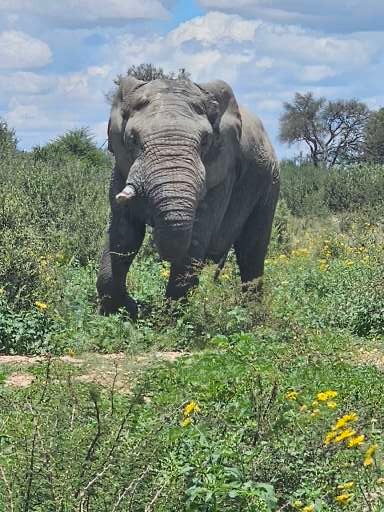
We encountered a lone bull at the water hole on the first day and throughout the week. Gary and Edyta often see elephants by the camp during the night but it was unusual to see one so close during the day. This elephant was brought with several others to the reserve from a bad entertainment situation that included elephant rides. It has taken a long time for him to become comfortable enough to allow us to watch him from the vehicle and not show stress.
Lions and leopards
We tracked a lioness and her 3 cubs following their tracks along the fence road but did not have any luck. I heard lion roars several times during the night in my tent and while waiting on pangolins to venture out of their burrows. Their presence was everywhere and while I did not see one, I experienced being in their world. The high grass and lush landscape made seeing the big cats difficult
Seeing other wildlife
Wildebeest
One of my biggest surprises was how beautiful wildebeest are. The colors are amazing. I also expected them to charge; probably because I associate them with the big migration where they always seem to be racing across the country. They look aggressive (to me anyway) but aren’t to humans. They prefer to flee if in danger but can charge if cornered. Wildebeest are actually a type of antelope and can reach speeds of 55 mph.
Giraffe
Speaking of beautiful colors, the giraffes in the Kalahari are stunning. I saw them from the dining tent but also on our wildlife drives. We encountered a herd with a fantastic big male. I had never seen such rich colors on a giraffe. This is partly age but also genetics.
Vulture Tales
One day, we saw vultures gathered and heard jackals call so we knew there was a fresh kill. These scavengers were waiting for the predators, probably lions, to finish so they could then feast. We took the Rover all over the area, trying to think like a lion on the hunt, but never found the scene.
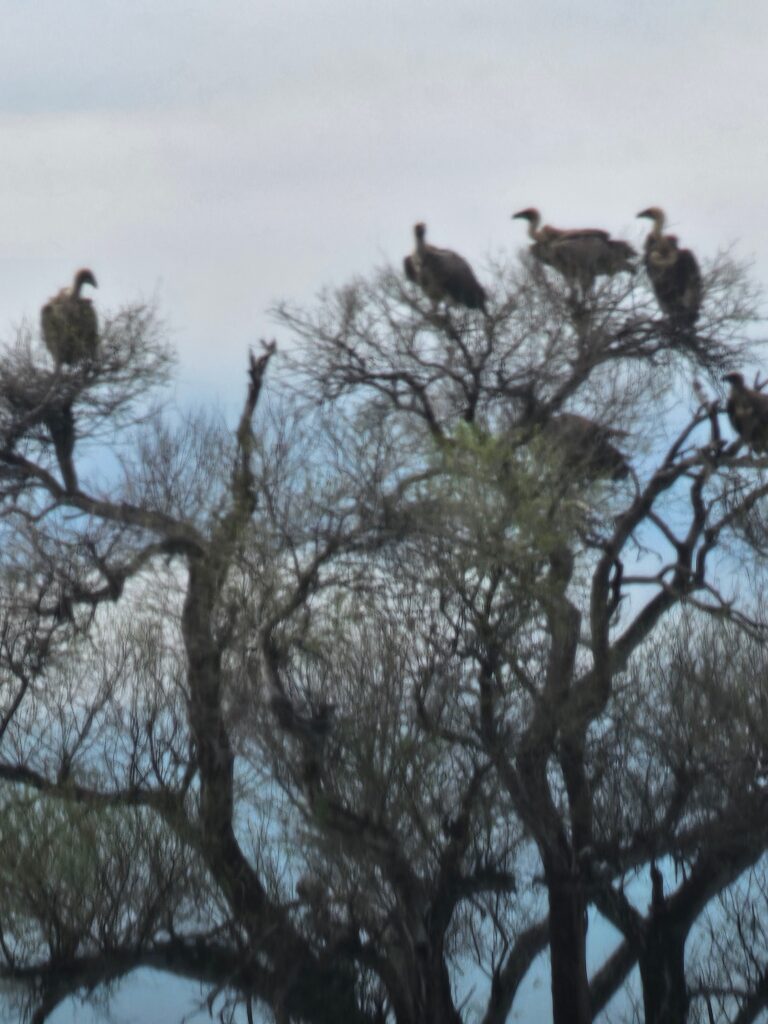
I wanted to get a picture of the jackal and its cry but didn’t have any luck. Its call was beautiful and haunting and I loved seeing its behaviors.
Other sightings
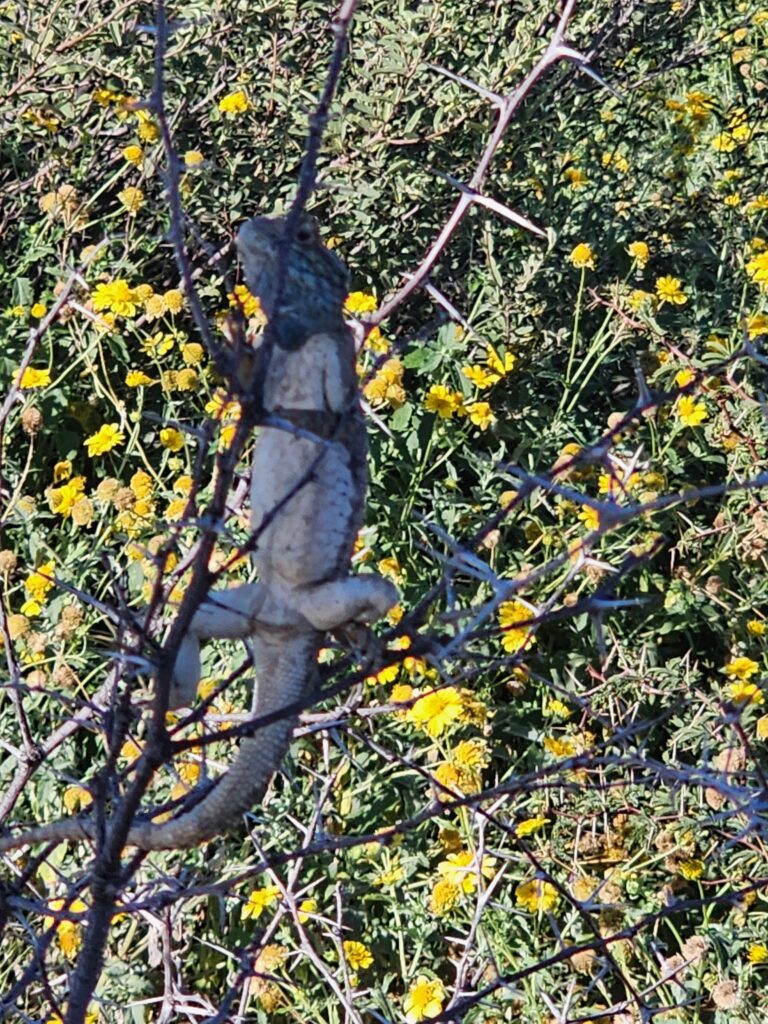
While I have tried to share the highlights, there were too many species to name them all. While the season did not lend itself to viewing the big cats or others due to the high grasses, there were so many birds taking advantage of those same grasses and wild flowers. We watched meerkats watch us from their den entrances. I saw zebra and many antelope species such as springbok, hartebeest, and kudus. A blue-headed agama lizard surveyed his domain from atop a small tree; probably hunting for a potential mate.
Views from the camp
I have a morning routine no matter where I am: coffee and journaling. On my first morning, journal in hand I made my way to the dining tent, where fresh fruit and a coffee machine awaited. As I settled in to write and gaze out, I realize I have a lone companion. A gemsbok, draped in the serenity of being at home. Something about seeing this animal resting so easily made me viscerally feel it: I was in their home. For the next week I was to be in their native space living alongisde the creatures that were here first. Other nations making their way through this life.
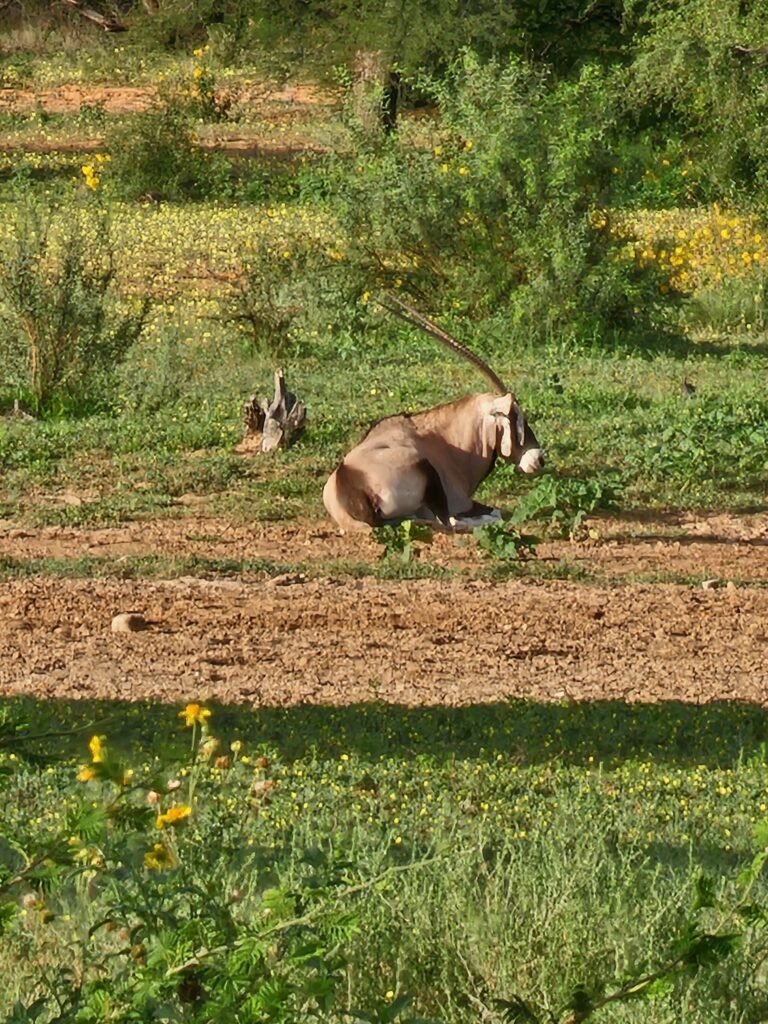
On other mornings there were zebra (with babies!), wildebeest, warthogs, giraffes, and other antelope.
When cooling off in the pool in the heat of the afternoon I saw animals casually walking past as I looked through colorful flowers and watched brightly hued birds. Returning from wildlife drives we would drive through herds as we approached the gate and fence that kept us separated. At night I saw eyes reflecting in the dark, becoming the observed instead of the observer. I was immersed in their home and world from the time I entered the reserve on that first day to the moment I left Khamab for the airport.
Summer and high grass made seeing wildlife difficult
I went during the most difficult season to see animals. It was early summer in the Kalahari. The winter and spring rains brought high grasses easy for lions to hide in. There were flowers and butterflies and many birds. We saw baby zebra from the dining tent, and lion cub tracks in the road as the lioness walked the perimeter. The best wildlife viewing is a different time when water is more scarce and animals gather in those spots. But I felt the animals’ presence everywhere. I saw their signs and heard them call. My soul was full and rich with the earth and her other nations making their way through this world. I loved it so much I may even go back in the same season. It’s hard to decide!
Summary
Conservation safaris go beyond focusing on seeing wildlife, so I wasn’t sure if I would see as many animals. Since you are on a working reserve and staff at Working with Wildlife is small in the very large Khamab Kalari reserve, there are no guarantees. I was blown away by how many animals I saw and how much I learned about them. I had experiences, such as following the wild dogs on a hunt and sitting for extended periods with an elephant, that a tradiional safari cannot accommodate. When you have guaranteed sightings offered on a traditional safari, you have to go where the animals are spotted (shared by another guide in the same park) to meet that guarantee.
I found the approach here to be a more relaxing and natural experience of seeing wildlife. If you’re worried that a conservation safari won’t fill the wildlife experience, don’t be. Find out the best time of year to go if that is your primary goal but a conservation safari is more intimate and the encounters longer. Most of all, I love the idea of helping conserve these precious species and their homes.